


CHAP Project is being implemented by Social Marketing Company (SMC) with partnership of Purplewood from July 2016 with the financial support from Global Alliance of Clean Cookstoves (GACC). The project is about behavior change communication campaign to drive awareness and adoption of cleaner cookstoves and fuels.
The Government of Bangladesh (GoB) launched its Country Action Plan (CAP) for Clean Cooking Solutions in 2013, which has a goal of eliminating kitchen-smoke by 2030. There are more than 30 million households in Bangladesh and over 90% depend on biomass fuels for cooking. When used in traditional cook stoves and open fires, biomass fuels emit harmful smoke that contributes to heightened levels of indoor air pollution, which has been associated with a range of illnesses and health conditions. One strategy identified in the 2013 Country Action Plan (CAP) was the development and implementation of demand creation activities to promote the entire Improved Cook Stoves category. The Global Alliance worked with the SREDA, Ministry of Power Energy and Renewable Energy on the creation of a Household Energy Platform to serve as the sector coordinator and to help achieve the country’s adoption goals. The project used learning from previous pilot campaign, Household mapping, FGD’s to determine the most effective targeted communication strategy.
The project aims to increased adoption (purchase, and correct and consistent use) of cleaner and more efficient cookstoves and fuels. The project has been implementing doing door to door activities (IPC) and out-door activities aim to increase awareness of the target audience about the benefits, options and supply channels of Improved Cook Stoves & Fuel. The activities are being executed in 16 sub districts of Dhaka and Barisal Divisions to create an enabling environment to change behavior of the target audience to shift from traditional cook stoves to improved cook stoves and consistently increase intension to purchase Improved Cook Stoves & Fuel. The project is dealing with two kinds of target audiences, primary and secondary target audiences.
Primary Target Audience
- Women and Men (Decision Maker of the family)
- Income level BDT 12,000-20,000 per month
- Current users of Traditional Cook Stoves (TCS)
Secondary Target Audience
- Adolescent girls and boys (ages 12+ and have influence in HHs)
- Influential community figures (e.g. political, traditional, religious leaders, teachers)
The project has been working with lower middle class and middle class households living in mostly rural areas of 16 sub districts. Behavior change communication activities specifically target man age 25-45 (heads of household and other males), and women (wives and others in HH) age 20-35, as the primary audience. School-going adolescents (age 12+) and key influencers within the community are the secondary audiences.
This project has several stakeholder engagements. The manufacturers of Improved Cook Stoves & Fuel are one group of stakeholders. For the policy support this project has been working with Sustainable and Renewable Energy Development Authority (SREDA) under the Ministry of Power, Energy and Mineral resources. Intensive community channels are being used in the project rather than mass media with an evidence based targeted Behavior Change approach.
The technologies of ICS&F that have been promoting under this project are as follows:
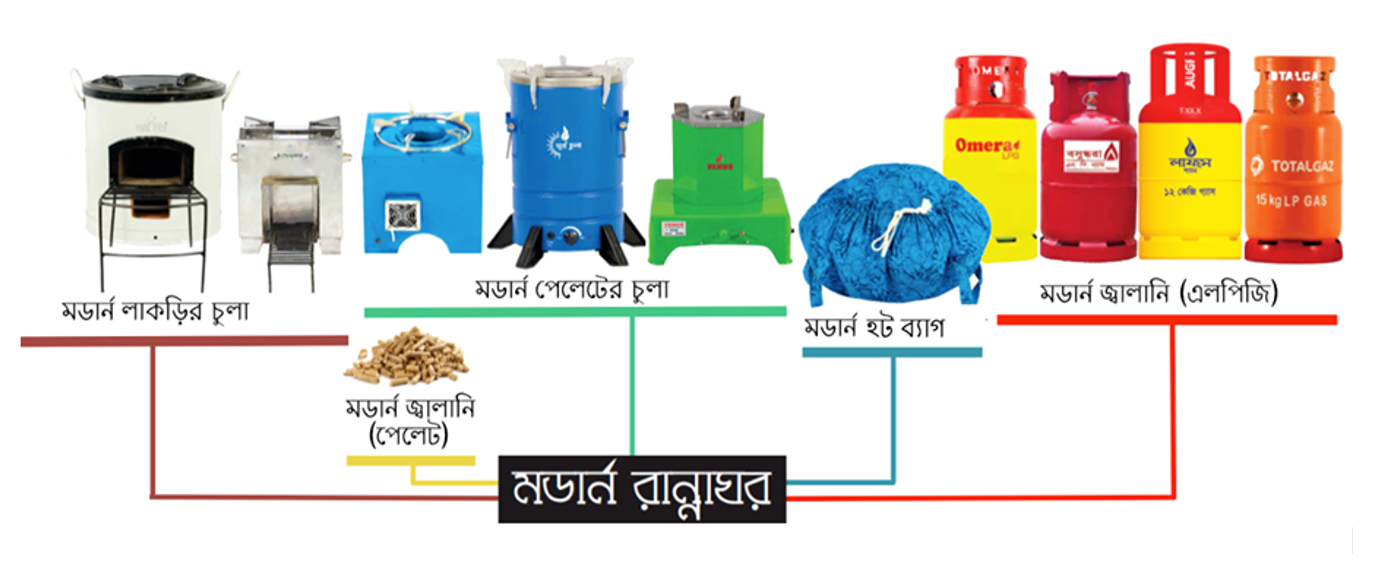
The project has been facing some communication challenges to implement the activities, such as:
The project has key indicators to measure the sustainability:
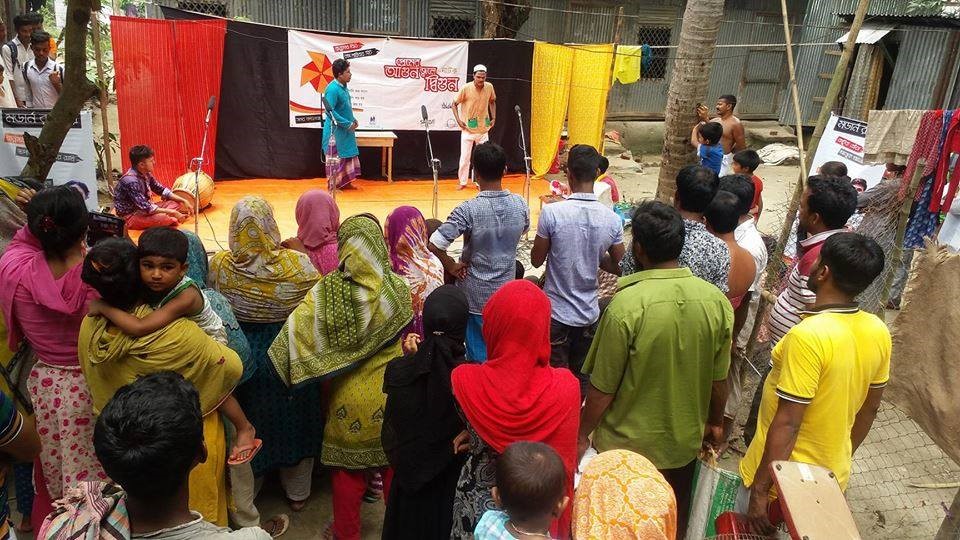
Street Theatre
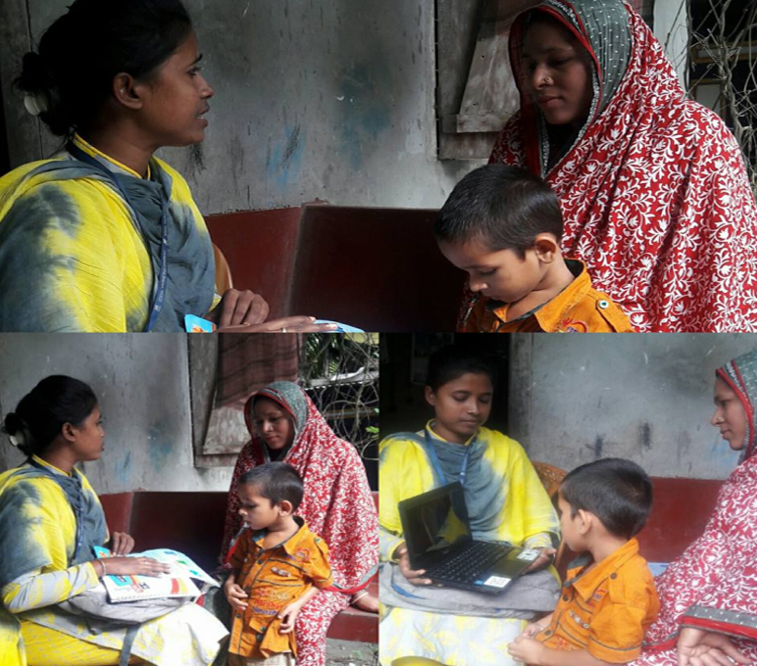
Inter Personal Communication (IPC) Session
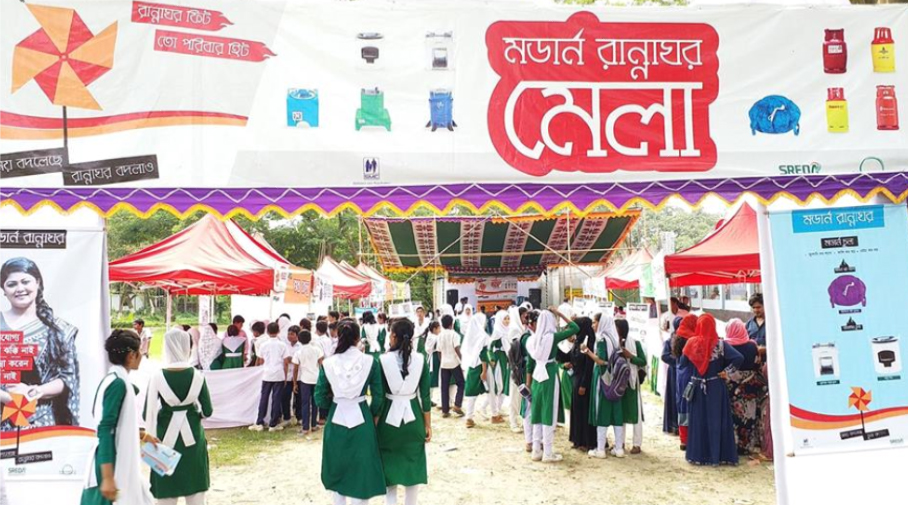
Local Fair on Modern Cookstoves
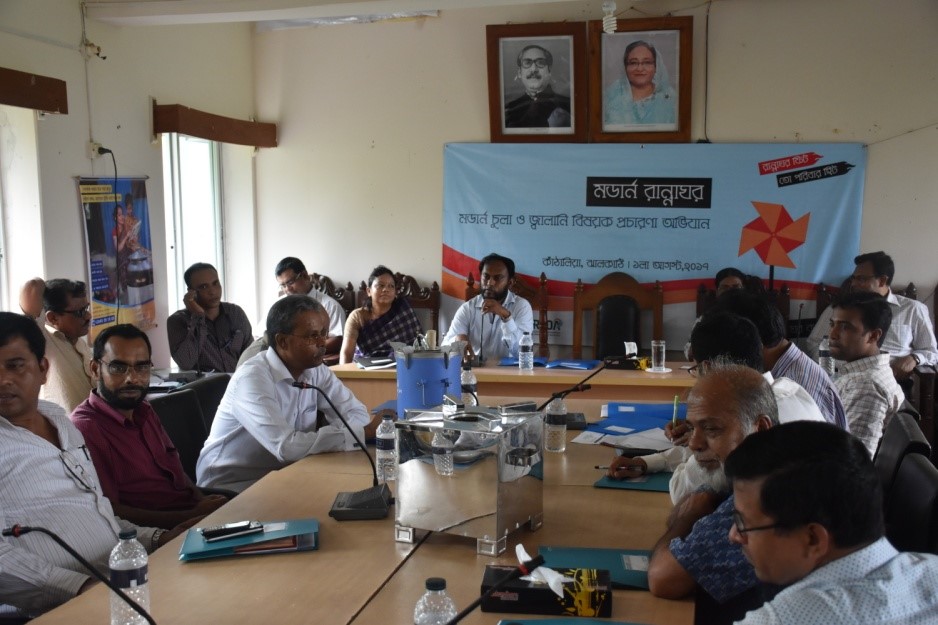
Advocacy Meeting with Local Administration