


Notun Din An innovative health and family planning community mobilization program
The Community Mobilization program is an initiative of SMC with the financial support from the USAID and SMC. The program is being implemented in partnership with 3 national NGOs-CWFD, PSTC and Shimantik in 68 Upazilas with USAID fund since 2013. SMC is also implementing similar types of initiatives in 36 upazillas of Natore, Bogura, Sirajganj Chattogram, Bandarban, Rangpur, Jeshore, Kushtia, Gaibandha, Tangail, Jamalpur, Manikgonj and Cox’s Bazar districts with its own fund since 2017. Under the SMC fund, 3 partner organizations-CWFD, Sachetan Society and Shimantik, are carrying out community mobilization activities. This is an integrated program to provide comprehensive range of products and services to the targeted population of Bangladesh. The program has undertaken ‘Notun Din’ (New Days), a community mobilization-based intervention, in total 104 upazilas of 32 districts considering low contraceptive prevalence rate and relatively high infant mortality rate. This Community Mobilization program aims to increase awareness, knowledge, and improve healthy behaviors among the targeted populations in the intervention areas.
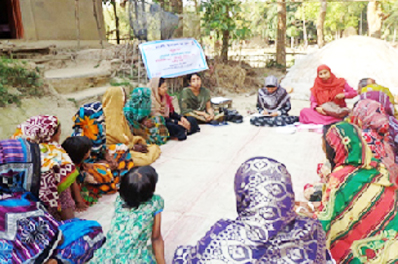
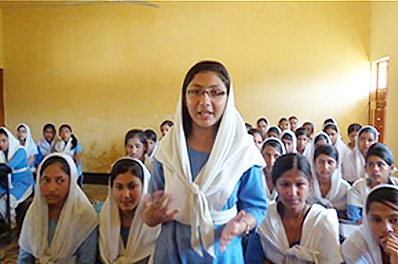
Access to public health products and services is always a challenging issue in Bangladesh. The major factors associated to this challenge are lack of education and awareness regarding necessary health care, non-availability of affordable health-related facilities, lack of or limited access to the health-related information and education facilities, etc. The community mobilization program is targeting to increase the demand for public health products and services such as family planning, child health, nutrition, maternal health, adolescent health, and hygiene issues through group meetings, IPC, orientation sessions, adolescent health sessions at educational institutions and community levels.The target audiences of this program are married women of reproductive age (MWRA), caregivers of under-five children, adolescents and community influential.
Transforming potential rural women into entrepreneurs is a key activity under the community mobilization program. These women are selected from the community through a competitive process by using a set of standard criteria, trained and capacitated, who are known as Gold Star Member. The objective of GSM model is to create and sustain the demand for and supply of public health commodities in the community. This model also aims at increasing women’s empowerment in community. The main activities of GSM include disseminating health related messages for creating awareness and behavioral change among community people. They also refer the potential clients for LARC and suspected TB patients to the nearest service delivery facilities and sell SMC public health products at household levels. A total of 3232 GSMs have been actively engaged and conducted different activities including creating awareness and motivating community people to adopt healthy behaviors in 68 MISHD and 36 SMC funded upazilas. The products are different brands of condoms and oral pills, ECP, ORS, zinc, micronutrient powder - MoniMix, FullCare, sanitary napkin, safe delivery kit, baby diaper, baby wipes, instant soft drink powder-Teste me, glucose powder - Bolt, pregnancy test strip - Quick Test, Paper Soap - Easy Clean, Vermicid and hand sanitizer.